
This may be the most important article for you to read… Don’t complain that I didn’t warn you!
One of the things mainstream (all the gurus) get wrong is this: they consider you a constant in opportunities. Constant as in fixed… As if you were the same when you are afraid, and when you are confident…
You are not constant until you are on the vibrational level of above 900. How do I know? Because I can see the difference in me and in my ability to act constructively, even though I am above 900.
Let me explain: The YOU, the watcher, the Observer, the maker of decisions is not constant.
Even mainstream can see that, but they don’t know what changes when you go from putz, ineffective, flailing limp dick to someone who can take effective actions.
They think it has something to do with your beliefs. That if you implant a belief in you then you will see what to do, and you’ll know how to go about effective actions, including the seeing, the words, the strategy.
Or they



 The mind doesn’t know who you are. The mind also doesn’t care who you are. The mind also doesn’t care if you enjoy life, live life fully, are fulfilled, or not.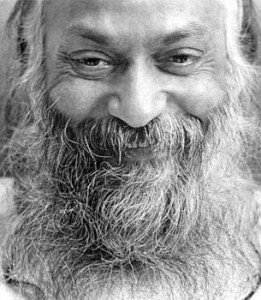
 This article, a word by word transcription of one of Osho’s talks from 20-30 years ago is very enlightening. You will see what is between you and enlightenment. Also, the stories and jokes are wonderfully funny… Read it.
 In this whole series, Osho examines a piece of poem or a story from a world culture that is spiritually meaningful. This poem is Japanese. Osho distinguishes being in the present, not being in the past, not being in the future, not desiring the present different from what it is.
 The bug free mind book is a great vehicle to take you to a place of power, freedom, and self-expression, but only if your relationship to it is through your body, not through your understanding.
 Believe it or not, grieving ((from Wikipedia: Grief is a multifaceted response to loss, particularly to the loss of someone or something that has died, to which a bond or affection was formed. Although conventionally focused on the emotional response to loss, it also has physical, cognitive, behavioral, social, spiritual, and philosophical dimensions. While the terms are often used interchangeably, bereavement refers to the state of loss, and grief is the reaction to loss, along with nostalgic longing for something or someone that probably won’t return.
 Tweet
Tweet
 Tweet
Tweet