This article shows the state of official science for emotional intelligence.
Psychologists are not interested in the groundbreaking work developed in the books Feelings and Words…
Although when you can already recognize your feelings, their inner dynamics, what they want you to do, what trap you my have stepped, unwittingly, the advice below is quite good.
Until then I don’t think it’s useful… Or may not be useful.
Even though emotional intelligence is really important to live a good life, to have good relationships, to get things done, to be well… for all of life.
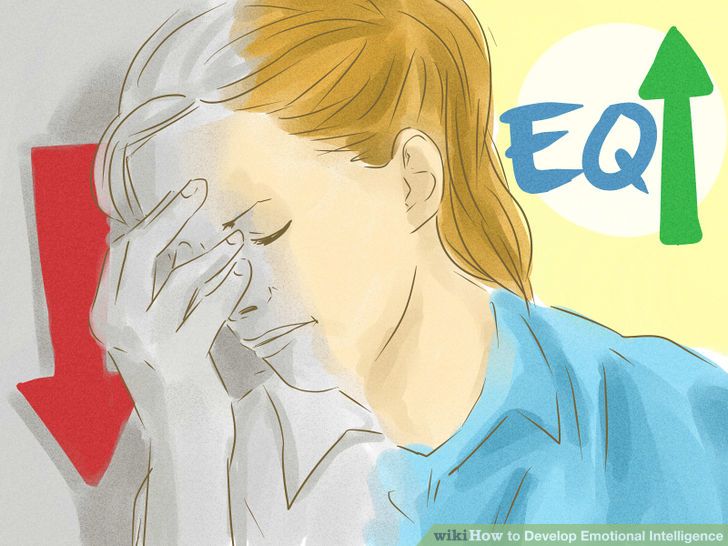
Emotional intelligence (EQ) is the ability to tap into your emotions and use them to make your life better. Being in touch with your feelings allows you to manage stress levels and communicate effectively with other people, two skills that enhance your life both personally and professionally. Unlike IQ, which remains constant throughout your life, EQ can be developed and honed over time. See Step 1 to learn how to develop your emotional intelligence using techniques you can try right away.
Tapping Into Your Emotions aka Know what you are feeling
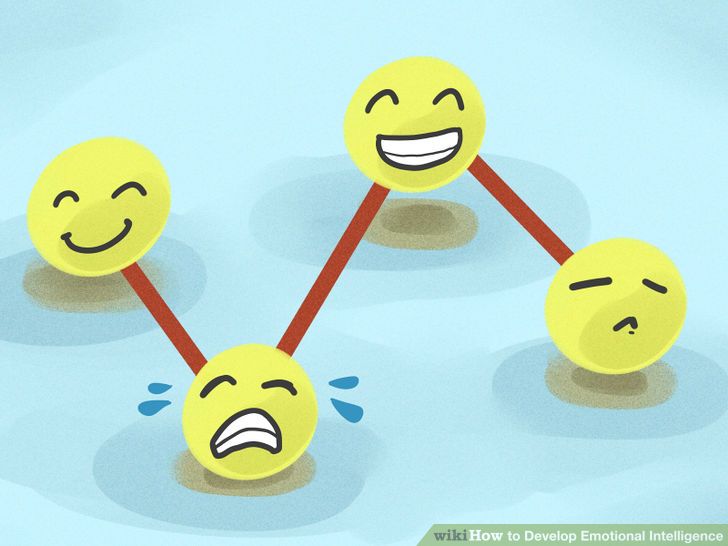
 Note your emotional reactions to events throughout the day. It’s easy to put your feelings about what you experience throughout the day on the back burner. But taking time to acknowledge how you feel about experiences is essential to improving your EQ. If you ignore your feelings, you’re ignoring important information that has a big effect on your mindset and the way you behave. Start paying more attention to your feelings and connecting them to experiences.
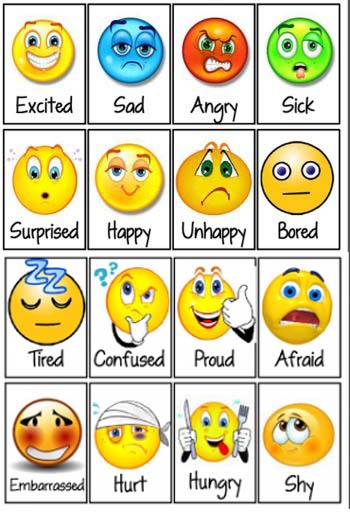
For example, say you’re at work and you get cut off during a meeting. What emotions arise when this happens? On the other hand, how do you feel when you get praised for good work? Getting into the practice of naming your emotions as sadness, embarrassment, joy, contentment, or any other number of feelings will start raising your EQ right away.
 Get in the habit of tapping into your emotions at certain times every day. What are your first emotions upon waking? Your last before you fall asleep?
Pay attention to your body. Instead of ignoring the physical manifestations of your emotions, start listening to them. Our minds and bodies are not separate; they affect each other quite deeply. You can raise your EQ by learning how to read physical cues that clue you in to what emotions you’re feeling. For example:
Stress might feel like a knot in your stomach, tight chest, or quick breathing.
Sadness might feel like waking up with slow, heavy limbs.
 Joy, pleasure or nervousness might feel like butterflies in your stomach, a racing heart or increased energy.
Observe how your emotions and behavior are connected. When you feel strong emotions, how do you react? Tune into your gut responses to situations you face every day, instead of just reacting without any reflection. The more you understand what spurs your behavioral impulses, the higher your EQ will be, and you’ll be able to use what you know to actually change your behavior in the future. Here are some examples of behaviors and what’s behind them:
Feeling embarrassed or insecure might cause you to withdraw from conversation and disconnect.
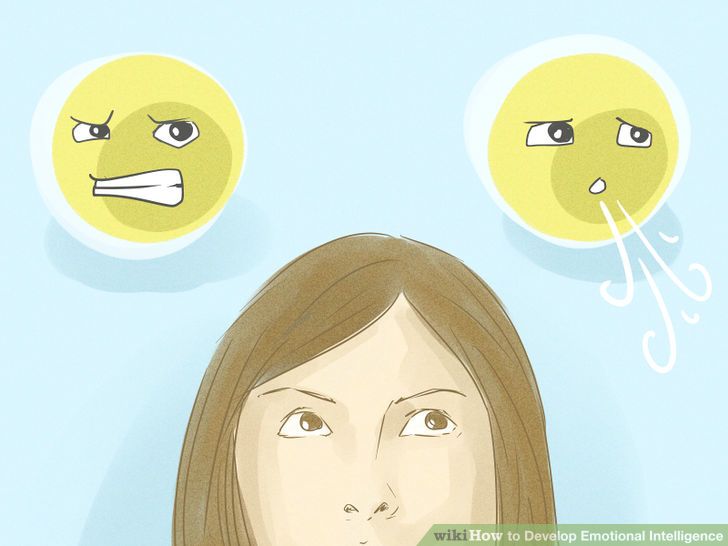
Feeling angry might cause you to raise your voice or angrily stomp away.
Feeling overwhelmed might cause you to panic and lose track of what you were doing, or cry.
 Avoid judging your own emotions. All the emotions you have are valid, even the negative ones. If you judge your emotions, you’ll inhibit your ability to fully feel, making it more difficult to use your emotions in positive ways. Think of it this way: every emotion you have is a new piece of useful information connected to something that’s happening in your world. Without this information, you’d be left in the dark about how to adequately react. That’s why the ability to feel your emotions is a form of intelligence.
It’s hard at first, but practice letting negative emotions surface and connecting them to what’s happening. For example, if you feel bitterly envious, what is that emotion telling you about your situation?
Fully experience positive emotions, too. Connect your joy or satisfaction to what’s happening around you, so you can learn how to feel them more often.
 Notice patterns in your emotional history. It’s another way to learn as much as you can about your own feelings and how they’re connected to your experiences. When you have a strong emotion, ask yourself when you last felt like this. What happened before, during and after?
When you see patterns, you can exert more control over your behavior. Observe how you handled a certain situation before, and how you’d like to handle it next time.
Keep a journal of your emotional reactions, or how you feel from day to day, so you can clearly see how you tend to react.
8
 Practice deciding how to behave.
You can’t help what emotions you feel, but you can decide how you want to react to them. If you have an issue with lashing out in anger or shutting down when you’re hurt, think about how you’d rather react. Instead of letting your emotions overwhelm you, decide how you’re going to behave next time your feelings grow strong.
When something negative happens in your life, take a moment to feel your emotions. Some people describe it as having a wave of sadness or anger wash over them. Once the initial wave has passed, make a decision about how you want to behave. Decide to communicate your feelings instead of repressing them, or get up and try again instead of throwing in the towel.
Don’t turn to escapist habits. It’s not easy to let bad feelings fully rise to the surface, and many people tamp them down by drinking too much, watching a lot of TV, or turning to other habits that numb the pain. Do this often enough, and your EQ will begin to suffer.
Part 2
Connecting With Other People
 Be open-minded and agreeable. Openness and being agreeable go hand-in-hand when it comes to emotional intelligence. A narrow mind is generally an indication of a lower EQ. When your mind is open through understanding and internal reflection, it becomes easier to deal with conflicts in a calm and self-assured manner. You will find yourself socially aware and new possibilities will be open to you. To strengthen this element of your EQ, consider:
Listening to debates on television or the radio. Consider both sides of the argument, and look for the subtleties that require closer inspection.
When someone does not react emotionally the same way you would, consider why this is, and try to see it from their point of view.
 Improve your empathy skills. Empathy means being able to recognize how other people are feeling, and share emotions with them. Being a more active listener and really paying attention to what people are saying can help you get a better sense of how they’re feeling. When you can use that information to inform your decisions and improve your relationships, that’s a sign of emotional intelligence.
To improve empathy, put yourself in other people’s shoes. Think about how you would feel if you were in their situation. Actively imagine how it must be to go through the experiences they’re having and what might alleviate some of their hardship in terms of support and care.
When you see someone experience a strong emotion, ask yourself, “How would I react in the same situation?”
Be truly interested in what people are saying, so you can react in a sensitive way. Instead of letting your thoughts drift, ask questions and summarize what they’re saying so it’s clear you’re in the conversation.

Read people’s body language. Make a point of trying to read between the lines and pick up on people’s true feelings by observing their facial expressions and other body language. Often people say one thing when the look on their face reveals that there’s a deeper truth. Practice being more observant and picking up on the less obvious ways that people communicate their emotions.
If you’re not sure that you’re skilled at interpreting facial expressions, try taking a quiz to telling. A higher tone of voice indicates that someone’s stressed.

See the effect you have on others. Understanding other people’s emotions is only half the battle when it comes to EQ; you also need to understand the effect you’re having on other people. Do you tend to make people feel nervous, cheerful or angry? What happens to conversation when you walk in the room?
Think about what patterns you might need to change. If you tend to pick fights with your loved ones, your girlfriend cries easily during conversations, or people tend to close up a bit when you come around, you might need to change you attitude so that you have a better emotional effect on people.
Ask trusted friends or loved ones what they think about your emotionality where you have room for improvement.
A person’s tone of voice can also be of impact. You may have trouble recognizing the effect you have on others, and they can help.

Practice being emotionally honest. If you say you’re “fine” and have a scowl on your face, you’re not communicating honestly. Practice being more physically open with your emotions, so people can read you better. Tell people when you’re upset, and share happiness and joy as well.
Being “yourself” helps other people really get to know you, and they’ll trust you more if they see where you’re coming from.
However, understand that there’s a line: control your emotions so as not to hurt others with them.
Part 3
Putting EQ to Practical Use

See where you have room for improvement. Being intellectually capable is important in life, but being emotionally intelligent is just as essential. Having high emotional intelligence can lead to better relationships and job opportunities. There are four core elements to emotional intelligence that help you lead a balanced life. Read this over and decide where you might have room for improvement, then take steps to practice your skills in that area:
Self awareness: The ability to recognize your own emotions for what they are and understand their origins. Self awareness means knowing your strengths and limitations.
Self management: The ability to delay gratification, balance your needs with those of others, take initiative and to pull back on impulsivity. Self management means being able to cope with change and to stay committed.
Social awareness: The ability to be attuned to other people’s emotions and concerns, as well as being able to notice and adapt to social cues. Being socially aware means being able to see the power dynamics at play within any group or in an organizational context.
Relationship management: The ability to get along well with others, manage conflict, inspire and influence people and to communicate clearly.

Lower your stress level by raising your EQ. Stress is a catchall word for feeling overwhelmed by a variety of different emotions. Life is filled with difficult situations from relationship breakdowns to job loss. In between, there are myriad stress triggers that can make any daily issue seem much more challenging than it probably is. If you’re stressed a lot, it’s difficult to behave in the way you want to. Having a good plan for relieving stress improves all aspects of your EQ.
Figure out what triggers your stress, and what helps relieve it. Make a list of effective forms of stress relief, like hanging out with a friend or taking a walk in the woods, and put it to good use.
Get help if you need it. If your stress feels too overwhelming to deal with alone, seek the help of a therapist or psychologist who can give you tools to cope (and help you raise your EQ in the process).

Be more light-hearted at home and at work. When you’re optimistic, it’s easier to see the beauty in life and everyday objects and spread that feeling to those around you. Optimism results in emotional well being and greater opportunities – people want to be around an optimistic person and this draws them to you, with all the possibilities that more connections bring you.
Negativity encourages people to focus only on what can go wrong rather than building resilience.
People with high EQ tend to know how to use fun and humor to make themselves and others feel safer and happier. Use laughter to get through tough times.
Community Q&A
If I use the tips explained here, how long will it take me to increase my low EQ?
It would depend on how well you have managed to apply all the correct tips mentioned above in your day to day activities and in your daily interactions with others. Emotional intelligence could develop over time through personal experiences or by developing healthy habits that could boost your mental and physical health at the same time. Read positive psychology books, listen to good music, exercise, eat healthy and be happy. You can improve your EQ in a week’s time if you will for it to happen. Be well, think positive and surround yourself with the right people who will make you feel great and special.
How will I overcome stage fright?
First, accept that stage fright is normal. Very few performers have never experienced stage fright. The good news is, it passes. Concentrate on what you are giving to others, not how you feel about giving it. Then, get out there on the stage and when you feel the fear, remind yourself that it’s normal, it’s okay, and it will pass as you perform. Do not indulge in unrealistic expectations. You may have to deal with this each time you perform. Self-talk is key. Remember to breathe. The audience is on your side. Focus on a friendly face, letting the others fade away, and begin.
How do I know whether my lower EQ has increased?
You will probably notice people behaving differently around you, being more comfortable and trusting with you, etc. You could also talk to a trusted friend about your efforts and ask them how they think you’re doing.
 I read the beginning of an article this morning. It made me laugh. It was a great release. Then I read the rest, and it made me constipated.