Your Dark Side: Desire To Receive For The Self Alone, Cutting Your Nose In Spite Of Your Face

All religions are against selfishness. All parents, all people tell you that you are a better person if you are about others rather than being about you.

The problem with this universally accepted principle is that we actually don’t know what we are talking about. It seems that what we are asked is to be selfless, to give up our selves, our self-interest.

Selfless can mean two things, both are a crime, a sin [note]meaning: you miss life in its entirety, all the present moments, all the good stuff, all the bad stuff… that is the meaning of the word, originally, of sin. Missing the mark… namely the present moment[/note] , a horrible thing giving you a horrible life:

  • 1. We now have and know no self. This is a widespread phenomenon [note]60% of all people has no sense of self, 95% of all people has no or not much sense of self today[/note] in this day and age, and I was a victim of this phenomenon for many decades.

I literally did not know what I liked, what I wanted, what turned me on, what floated my boat, what I was excited about, what would have I wanted.

I knew fairly well what I didn’t like, but just like with everything, there are a thousand ways to miss the bulls eye, but only one way to hit it.

Knowing who you are, what you want, what turns you on, what ticks you off, what your preferences are, what your values are is mandatory, if you want to be on the path to become a human being.

Without that you are just unconscious sheep. [note]But worse than that: even if you want to walk on the path: whatever is not solid enough to drop, you can’t drop it. You can’t catch what you don’t see! Which means you are stuck with an undefined, amorphous “self” that doesn’t serve, can’t serve  you.

You’ll go into your mind trying to remember who the heck you were in the past to give you some semblance of guidance! For most of you that is worse than death.[/note]

  • 2. Giving up your own life, on your own life, on your own interest, on your own enjoyment, on your own fulfillment… for others’ life, interest, enjoyment, fulfillment, whatever…

You cannot be a human being giving away your own life: it is against your nature, you are suppressing your nature, and anything suppressed will get its due: you either will go crazy, sick, or raging angry at the most inopportune times.

It is only your ego, the one that says: “but I am good…” enjoys it.

Human Being, (not just by looks and physiology, but by consciousness,) a Human Being, takes 100% responsibility for his physiology, for his needs, and takes care of those, without abusing anyone, without taking away anything that belongs to someone else.

A real Human Being does not suppress: instead uses his intelligence to express the needs, fulfill the need at appropriate times and in appropriate places.

You need to own that you are built on animal body, and consciousness, nothing will change that.

Making your nature wrong kills you, kills your body, kills your spirituality, but feeds your ego.

Unless you are Self-ish, your life won’t matter. Your self-expression will be pretentious and fake, or non-existent. Your creative powers will be un-expressed, unused, or frittered away.

Now, let me talk about something that no one talks about: another price of suppression: ego.

Ego, in its eagerness to make you special, make you successful, is doing a horrible number on you.

All Soul Corrections deal with this very issue: I am going to explain it here.

Desire to receive for the self alone is what modern psychology calls ego. Ego desire. Being right, making the other wrong, dominating, avoiding domination, avoiding responsibility, and all the other ego moves. [note]the six moves of the ego,  six ways to have desire to receive for the self alone:
1. wanting to look good/avoiding to look bad/causing another to look bad
2. being right/avoid being wrong/make another wrong
3. winning/avoid losing/cause another to lose
4. dominate/avoid domination
5. justify self/invalidate another
6. avoid being responsible for what is yours[/note]

Instead of being Self-ish, (knowing who you are, knowing what is your unique expression, knowing what you need and what you want, without EVER violating another’s right for the same) you have suppressed Self-ishness, and now you feel justified to trample on other people’s rights, interfere with their lives, or withhold what you would naturally give them.

I can see this clearly in conversations, namely in all podcasts, all Playground partner calls… It is so obvious to me, so invisible to the offending person.

Most of your life is about gaining power over others… a clear violation of the base law which is: you can have anything you want without taking away another’s right for self-determination, for fulfilling their purpose, to earn their living, to live in peace and happiness.

Your main ambition in life seems to be making people miserable, upset, feel bad about themselves, get sick, lose the will to live.

I mean it. This is your main occupation, your main, albeit hidden purpose in life, unless you are Self-ish.

When you are Self-ish, you are busy creating, you are busy Self-expressing, or just living.

People suffer servitude, or animosity around you, and you pretend that you have nothing to do with it.

You won’t really do anything else, lest they have some fun, some benefit, feel like they can just live their lives. No, you won’t allow that!

Let me give you a recent example:

I have recently released a revolutionary audio recording, called Harmonize The Planet. Originally it was meant, like the name suggests, for harmonizing the planet. I asked people to join in and I was collecting a “donation” to be able to make a difference in the world.

Making a difference in the world is something very important to me, given that humanity has accelerated the pace with which it is destroying life on the planet. And there are not a lot of people whose activity can make a difference in that arena. I was excited that I could create something, and I thought that people will be excited to be able to contribute. After all this is OUR planet. And I supposed that my readership consisted of high-minded people.

Then something unexpected happened: the audio turned out to be doing two other things, on the level of the individual, things I didn’t know it would do or even could do..

  • It turned out to be an effective antidote for the common anguish and anxiety… Trust me, I had tried everything before, and nothing worked like this audio.
  • The second thing that it does is even more valuable. You see, to go to the next evolutionary level, humans need to use the mind as a tool, instead of being used by the mind… like puppets.

People use their minds to understand things, to listen, to see, to see what they feel. The mind is not a suitable tool for that, so people are completely cut off from reality, and the culprit is the predominance of the mind.

This audio, The Harmonizer, shuts up the mind. It creates a welcome pause, a silence, in which the Beyond can talk to you, in which you can contemplate who you are, in which you can feel your feelings, listen to your inner guidance, hear what others are saying, or just rest.

The audio cost a pittance, but only my students were buying it.

When I muscle tested why other readers don’t buy it, I got that people resent that they have to pay for others’ benefit. They’d rather stay anguished, or riddled with a busy mind, lest others benefit from what they are doing.

Now, whether they are thinking of their mother-in-law, their “best” friend, I don’t know. I know one thing: if it benefits another, as well as them, they don’t want it.

Here is another example:

Some 25 years ago I had a lover. Every time I wanted to have sex, he refused. He said he felt used. He said that I was asking for it because it was good for me.

What he could not see, did not see, is that he, a man, always enjoyed sex, whether I did or not. But he preferred that he was the only one enjoying it.

Somehow it made him feel better if he was the only beneficiary of the “act.”

The people that say: no, “I won’t buy the Harmonize The Planet audio, because it also helps others,” are just like this one-time boy friend of mine.

A direct result of pretending all your life to be generous and selfless… while you withhold yourself and wish everyone dead around you, so you can finally have your day.Get your Harmonizer audio

.
.

Read the original article: Your Dark Side: Desire To Receive For The Self Alone, Cutting Your Nose In Spite Of Your Face

Will measuring your vibration prove that you live a butterfly life… not a caterpillar life?

First let me clarify the terminology: vibration is an invented logarithmic number… It indicates the level you are on the level of evolutionary scale in every area of life, including intellectually, spiritually, emotionally.

Butterfly life:

you can live life on the horizontal plane (caterpillar life) where everything feels personal, attacking, dangerous, offending, painful, dramatic, or the vertical plane, what we could call “heaven on earth” where you are not bothered by stuff… where you experience joy, enthusiasm, love, caring, etc… and get things done, so your life feels worth living.

One of the most frequent things people find my site with, is the question: what is the real difference between a butterfly and a caterpillar, and why you can’t talk butterfly language with caterpillar people. Continue reading

Competence is rare… People who can get things done, well, on time… are rare

Competence is rare.

You know the people you deal with: they are just like of you… 99% of them 99% of the time are incompetent, late, shoddy work, nonexistent knowledge, sloppy delivery, tunnel vision, no distinctions.

You don’t have to be competent in everything: be competent in what you do for a living, and in your relationships.

But, of course, it will require something you haven’t been willing to do: get better. Learn deeper, more, more precisely. Practice, and bring integrity to it.

Deliberate practice, the rare phenomenon, is rare because people think: practicing is doing it the same way, over and over, expecting a different results.

One of the characters, a literary character, practices marshal arts, etc. every day, hours on end.

Lincoln, the president, said: I’ll sharpen my axe for five hours so the one hour I spend with cutting the tree, the axe is “competent” to do the job.

And you read it, and you probably say it, “good for you Lincoln, see what it got for you? assassinated.”

But I’d rather be assassinated than just be nothing at all. A nobody. A wannabe.

How do you NOT build competence?

Sometimes the inverse inquiry is the most effective.

I am going to heavily rely on the behavior of my students, so this is not a general question, but like with any principle-sounding sentence, if it is not true everywhere, it is not true anywhere.

One of the common characteristics of people who fail to build competence, is fancying themselves already there.

It is a character flaw. And maybe it is also a lack of self-knowledge, a lack of awareness, a lack of willingness to be a beginner.

Some movies are brilliant, and their brilliance is lasting. So is with the original Karate Kid.

In that movie Mr. Miyagi has the wisdom to know that the kid, Daniel-san, KNOWS karate by having seen it… so he has preconceived notions on how it’s done.

So he teaches Daniel-san in a way where he learns the basic moves without the help of his eyes… he builds muscle memory first.

People have a hard time considering going back and building competence if for some reason they didn’t have their own Mr. Miyagi, and they started wrong.

I have been one of them: in architecture. I missed an entire semester and its step by step building blocks system of knowing what is inside roofs, walls, etc… and I could never go back and learn what I missed… and lost confidence in my ability to ever know, really.

And probably every other areas of life… When I muscle test my competence level, in general, I get 60%.

My most self-confident sounding/behaving students have a competence level under 10%… and until they get, in their bones, that the foundation is missing, they will not be able to change that number.

In a world where the average competence level is 3%, where the President of the United States of America is below that average with 2% competence, it is not an accident that people have a “good enough” threshold that makes them incompetent in most areas, including their profession.

Famous basketball coach … keeps on his team practicing the basics… because all excellence is build on the basics performed excellently.

Not interested in feedback… unwilling to hear the music

I have had a student who didn’t get a raise she had gotten every year. She was angry about it, and scared… When I asked if she found out what her boss had to say as feedback, she said she didn’t want to hear it.

Accurate feedback plus a method to improve one’s performance is crucial to increase one’s competence.

I have a student, who has one area of life where he is very competent. 70%. In other areas of life not so much: his average competence level is 10%.

He astutely observed himself and how he learns best, and added two areas of life to where he can raise his competence level: the work of the Playground, and playing the guitar.

He is diligently building muscle memory in either, both with frequency and with intensity, continually soliciting feedback from other people, like myself, or a guitar teacher.

If feedback is not the most valuable thing for you, instead is a reason to argue or feel devastated, you are not likely to get more competent.

Your illusions about yourself will keep you from getting better.

Considering oneself an indivisible whole… not a team of parts, aspects, etc.

This mistaken world view may come from religion, or religious parents.

In this world view you are either good or bad, either valuable or value-less, and you have no concept of feedback, no concept of gradual growth, no concept of reality.

The coach’s job is often needed on this level: to emphasize that there is the person, the intrinsic value, and then there is the extrinsic values: this is where competence lives.

Competence is not an intrinsic value, it is the value you can produce with your activities: worldy values. Exchange values.

And being poor in competence has no relevance to your value as a person, the intrinsic value.

Now, I need to make a detour here, a clarification: being pleasant, being a good conversationalist, being uplifting instead of being a cry-baby, a depressed “clod of ailments and grievances complaining that the world will not devote itself to making you happy” is still an extrinsic value. Not intrinsic. Intrinsically we are all unique, special, and invaluable… while extrinsically we cover the whole range of not at all – to immensely valuable. ((Being a force of nature instead of a feverish, selfish little clod of ailments and grievances complaining that the world will not devote itself to making you happy. I am of the opinion that my life belongs to the whole community and as I live it is my privilege – my privilege to do for it whatever I can.))

For a coach, a teacher, you taking the coaching willingly, is the most endearing extrinsic value.

Whether you are sullen, threatened, argumentative, belligerent, resistant, superior, these, for the coach are all extrinsic values that diminish their ability to take you where you said you wanted to go. Competence in one area of life or another.

Business, relationships, life enjoyment, living a life worth living.

Intrinsically you are like everyone else… but extrinsically you may be someone who cannot be trained, who insists on being stuck on a low level of competence. Or you may be a shooting star who takes training well and will end up at the top of your game… the game you choose.

It is not easy to get competent in a game you haven’t chose, but others have chosen for you, or chose temporarily and now became your main occupation. But even though it is not easy, in my humble opinion, unless you really hate it, and unless you have already something better, the first job to do is get good where you are… so you can keep all your power about you.

No effort is ever a waste… I got trained as an architect and I haven’t done architecture for 31 years… I trained myself/got trained in 20 some other skills and crafts, and it is never lost… being a rounded person is always a good bet.

Did I get really competent in all of those? No, not even close. And yet, the sum total of my competence is unusually high… while even if you are good, really good at one thing and nothing else, you never reach my level of competence, because life is more than just one profession… Life has four pillars, health, wealth, relationships and fulfillment…

Read the original article: Competence is rare… People who can get things done, well, on time… are rare

How we keep our self-worth, self-value low in life… new insights

I have been posting my articles on Medium, an online platform, for the past two years. This morning I was tallying up what articles were well read, well thought of… and was pondering if I should write articles that people like, or if I should continue writing articles that people need.

I can look at the question through many different “filters”… integrity, i.e. being true to myself. Being true to my principle: “Never doing anything for money that I wouldn’t want to do for free.” or the newest distinction for me: project mode vs process mode.

Learning

Learning new things is both exciting, and humbling. More humbling, in a way, than exciting. I never really want to learn anything new, not about myself, not about life, not about people, not about anything. I already know enough, says a part of me… and I break out in hives (figuratively) at the option of learning something new.

And then, when I do learn something new, I have to process it, and rebuild my self-view, maybe even my world view. It could be fun, but it really not pleasant.

If you consider that this is what I ask from other people, for a living, I could be viewed pretty “inauthentic”… looked in one way. I don’t think I am, I feel the pain it cost people to learn something new, and have compassion: see where they are at and am willing to help them through.

Yesterday’s article on the two hemispheres of the brain

Yesterday’s article was the result of a huge learning, and I didn’t hear any echo until this morning. Even this morning it wasn’t any talking about what I wrote: instead I got an example of how it is true, that when you move from the high mind-share, high about-me score, you have creativity and joy available to you.

What I didn’t see, and one of my students taught me, is that the project mode, when you are hellbent on getting the result, and put up with the process that you’d rather not have to go through, you are in the mind: the only place the future exists, you are in about-me mode, and you are in left-brain mode, even if you are doing “art”. Of some supposedly joyful thing, like a game, or sex, or a conversation.

When you shift into process mode, you are in the present moment, and that is definitely not mind. Mind doesn’t even know about the present moment.

This traditionally project mode student of mine did this shift, and for the first time he experienced joy and creativity (his one art is songwriting, he has others) and called his state: I am better than ever. The joy was tangible in his voice.

And that joy, that “being hooked up” to the divine source of joy, creativity, transcendence is available all the time, not like the project mode that has a time and a place and a duration… what most people seem to crave.

——————

The strait jacket of identity… and the string that move the puppet

This same student brought up an issue that has caused another unwanted learning for me (what I am referring to in the title of this article).

He was pondering and examining why he has the urge to teach his mother what he knows to teach… even though it always leaves him with a sense of emptiness and futility.

I recognized myself in that… I have been getting better at this, but only with a lot of self-discipline, using my short supply of will… to stop myself.

Maybe that is why, on days when I see people who I could teach, who don’t want to learn, never asked for it, don’t want it, don’t appreciate it, I get very tired, drained, and have suddenly no joy.

What’s going on in the invisible?

Most everyone had an incident in their lives where what they said or did was not appreciated, not heard, not valued, and now they are trying to fix it.

The problem is: you cannot fix anything that is not wrong.

If a screw falls out: you can put it back. If a vase breaks, you can glue it together, but if your diagnosis of what was “wrong”, amiss, is mistaken, all your efforts at fixing it won’t fix it: because it wasn’t broken to begin with.

We spend most of our lives trying to fix what never happened, what wasn’t real to begin with.

  • My decision was, about my failure to be heard, is that I was worthless, a throwaway, not valuable.
  • My student’s decision was, in his incident, that he can’t… Can’t possibly do what life wants him to do… no matter what he does.
  • And his Playground partner’s, in relationships, said: “I can’t win… not even if I yell”

And each person, who’s ever  experienced a “failure to be enough” in an incident, invented a fix… and that’s become part of the identity they are today.

  • I am hellbent on providing unique value, proving that I am smart
  • My student became well spoken
  • His Playground partner (I don’t want to use names for privacy) became alternately bombastic and meek and self-sacrificing in the face of people opposing him or wanting something from him.

All inauthentic ways of being… perpetuating the original failure to be…

  • …in my case to be seen by my mother as a person,
  • in my student’s case: being able to do what he was asked to do (mediate between his parents at a young age) and
  • in the case of his Playground partner: be able to be heard as capable and valid.

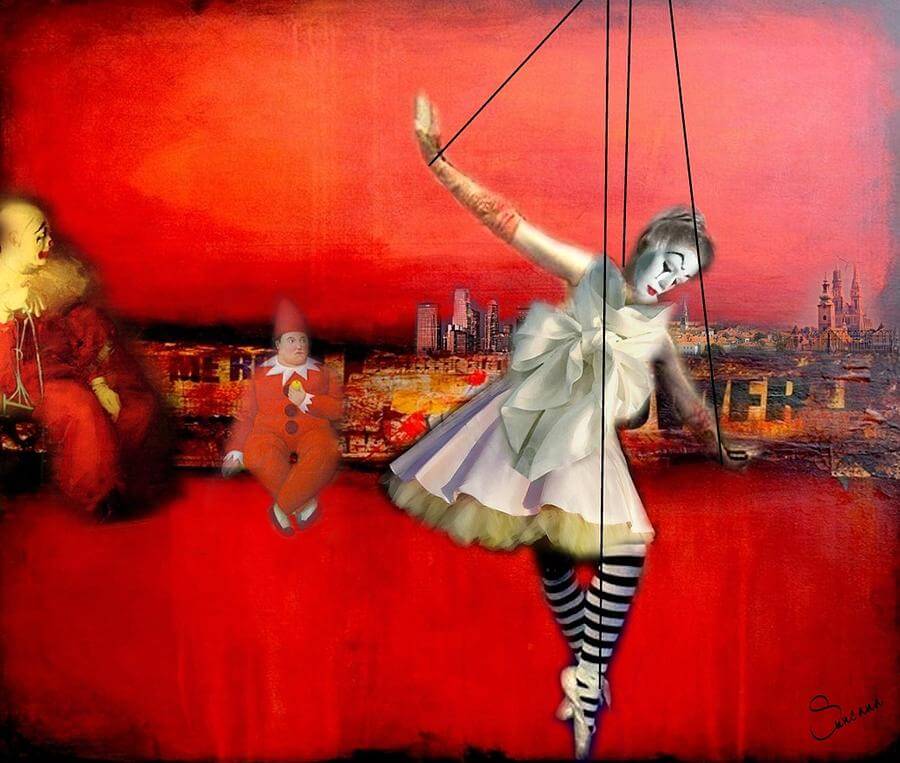
I have written a lot about being a puppet on a string: this is one example you are a puppet on a string… perpetually being pulled in to recreate an early misery… feeling less than… without having much power over it.

It is an invisible dynamic, and until it is revealed, fully seen for what it is, it will continue doing its dance, uninterrupted, at the expense of your joy, power, and self-expression.

It occurs to me that I could measure to what degree you have self-value…

  • My student: 10%
  • His partner: 10%
  • Me: 30%

This is not the same measure as overvaluing one’s worth as in delusion (also measured in the Starting Point Measurements.) It is what you bring into every conversation… what you hope is higher, but it is you who does whatever you need to do to keep it at the level you decided when you were young and someone invalidated you.

I lived most of my life with a low self-worth, a low self-value of 3% and have managed to overcome that impediment, somewhat, recently. I’d like to up it… but have no idea what I would need to do… so it’s time to have a heart to hearth with Source about that.

xxx

It is Tuesday and I get my weekly horoscope by Rob Brezsny in my inbox on Tuesdays.

Today, it seems, for the first time, his non-horoscope type content was so in sync with what is going on in my courses and for my students, that I had a feeling that I may be on the right track, doing the right thing, and the Universe agrees with me. Here are a few quotes from what he says in the email, and my comments:

THE MORE ACCIDENTAL, THE MORE TRUE

“The more accidental, the more true,” wrote Boris Pasternak. Scholar Mikhail Epstein expanded this observation: “The more accidental the phenomenon, the more divine its nature, for the divine is what has not been envisioned, what cannot be deduced from general rules, nor irreducible to them.”

If we pursue this line of thought to its logical conclusion, we may decide that the most useful sources of illumination are not always holy books, revered dogma, and great truths that everyone has heard. They might also be serendipitous anomalies that erupt into the daily routine and break the trance of ordinary awareness.

“The tiny spark,” Epstein writes, “is the precise measure of the holiness of the world.”

(Source: Mikhail Epstein, “Judaic Spiritual Traditions in the Poetry of Pasternak and Mandel’shtam.” Translated from Russian by Ruth Rischin.)

The nature of evil

To the degree that we stop projecting evil onto others and face it and deal with it in ourselves, we are far more likely to act with moral equanimity (mental calmness, composure, and evenness of temper, especially in a difficult situation.) toward everyone else.

Our effort to wrangle (argue) compassionately with the shadow within us is an effective ground-level way to purify and strengthen our efforts to help and redeem the outer world

Where to look for evil?

“If only it were all so simple! If only there were evil people somewhere insidiously committing evil deeds, and it were necessary only to separate them from the rest of us and destroy them. But the line dividing good and evil cuts through the heart of every human being. And who is willing to destroy a piece of his own heart?”
— Aleksandr Solzhenitsyn

Read the original article: How we keep our self-worth, self-value low in life… new insights

Are you part of the problem or part of the solution? Don’t be hasty answering…

we-have-met-the-enemyYesterday and especially today I had plenty of reasons to not want to face what there was to face: that we are the problem. [note]If you have been reading my writing long enough, you know that you can’t fix a problem, trying to fix it makes it worse… bigger, more dangerous. Because fixing is a change: the more things change the more they stay the same.[/note] Especially if and when we think it’s others.

I haven’t done MY soul searching, but I will, I promise.

For now, just to document it, I’d like to address what I have seen.

One client paid me to remove her children’s attachments.

I am still working on the second child, and this is what I have seen:

If you live inside a strong judgmental world of your own, where everyone, maybe including yourself, is wrong, then you are the Dark Side in your and your children’s life.
Continue reading

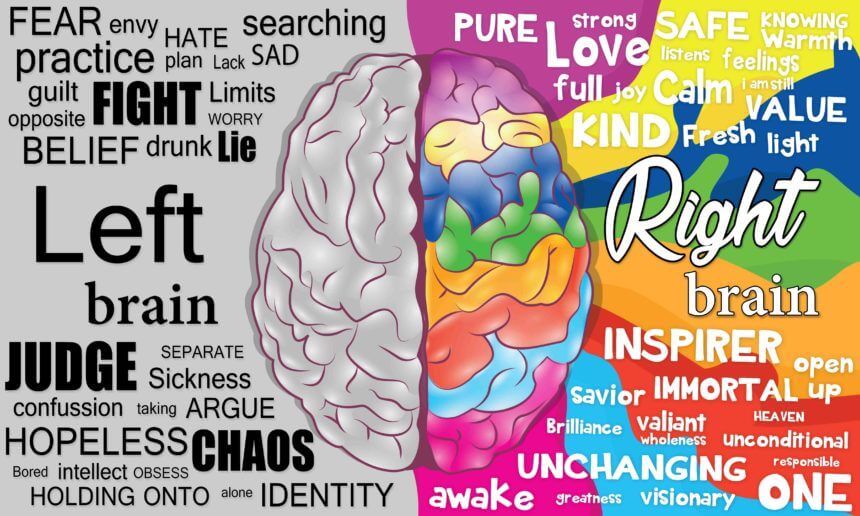
The two hemispheres of the brain and spirituality… what is your life experience?

The scenic route of getting some teaching, and making it your own nurturing, life affirming tree of life knowledge

I want to share a phenomenon, that, hopefully, will get clearer as I am sharing it… At the moment I can only see its visible aspect… I am almost certain it has an invisible aspect as well.

I read about three hours a day. Something that isn’t connected to my work: fiction.

But recently I have taken on a 20-day challenge: listen to 20 episodes of a Hungarian psychologist, Dr. Peter Popper, in his Mesterkurzus (master course) series, an hour long each.

Excellent, fascinating, the dude is both a psychologist, an university professor, a clinician, AND a religion expert… whatever that means. Continue reading

What if it is unlikely that you can become the best version of you? Is it still worth going for it?

Something I just read made me get up from bed and come back to my computer. It is something I have almost forgot… even though it was one of the most important things I have ever learned.

It is: instead of fighting the bad, grow the good.

Of course, some of the principles we live by become invisible… this is one of those.

It’s not my invention. In fact the two wolves the Indian (Native American) tale speaks of, use exactly this principle: feed the good in you.

But the way it was worded in the book I just read was more profound. It says: Let me grow more of the good myself so the bad is less of me.

I didn’t need to kill the iceman (in me). I didn’t even need to fight him. I just needed to make more of myself, so that he would be less of me.

Continue reading

The non-linear process of growth to a live well lived

I watched a Hungarian video yesterday on the kids who can see auras, and such… and first I felt upset, then confused, and then, by today, after I finished this article, I was clear: so what?

Every ability, every capability, ordinary or not, is only as useful as it will make you live a life worth living… but what is the usefulness of thousands of kids seeing auras… really! So what? That is their accomplishment?

Just like being an empath, seeing is a curse as much as a gift… the difference between the two is what you are going to do with it… None of the future is self-explanatory, or simple… you have a tool… but you still have to become “a human being” if you want to be happy and live well.
Continue reading

More Victor Frankl Videos

Clips from the Victor Frankl Archives

To most people Viktor Frankl is known as author of “Man’s Search for Meaning” and the founder of Logotherapy. But beyond these two aspects of his person and life, Frankl was also known as a philosopher, thinker and close observer of behavior of individuals and behaviors and trends of society. He did not refrain from commenting on problems of larger scale and contexts outside the field of psychotherapy. Some called him a “wise old man”, some critizised him. His precise perception allowed him to spot problems concerning modern day society and he felt obliged to comment on them, as they often formed the fertile ground on which many neuroses would blossom. On this webpage you can experience a variety of original comments Frankl made throughout the years on TV and in lecture halls. Enjoy…


NEW THEORY … approx. 1963 [2:08]
TV interview on one of Frankl’s early lecture tours in the USA.


RESOURCES OF SURVIVAL, 1987 [3:57]
Lecture, Southern Methodist University, Dallas, TX. Frankl on ideas and ideals, depth- and “height-psychology”. Here is his much cited closing statement in which he reminds the American audience of the close ties between freedom and responsibility…

JERRY LONG: “I BROKE MY NECK, BUT IT DID NOT BREAK ME” [6:55]
One of the rare appearances of Frankl together with Jerry Long. Mr. Long, paralysed from neck down after a diving accident at age 17, wrote to Dr. Frankl the lines “I broke my neck, but it did not break me.” Long became a psychologist despite his severe handicap. He died in 2004.


ON EXISTENTIAL PHILOSOPHY [2:40]
Frankl discusses the differences between logotherapy and the views of french existentialists Sartre and Camus.

DRUGS: SUBJECTIVE VS. OBJECTIVE MEANING [4:28]
One of Frankls main topics in the 1960s. When teaching at Harvard University in 1961, he was among few who opposed the experimental use of LSD proposed by Dr. Timothy Leary, stating that “freedom is only one side of a phenomenon whose other side is responsibility”. (California 1968)

ON BELIEF AFTER THE HOLOCAUST [3:31]
Can one believe in god after Ausschwitz? Frankl´s view differed from that of many within his religious community, often sparking emotions and controversy. An rare recording, where he points out his position very clearly.


THE WILL TO MEANING [3:19]
Questioning the existence of meaning in life once was described as a symptom of neurosis by Sigmund Freud. Frankl´s view could not be more different. In this interview given for Canadian television in 1972, Frankl describes the connection between meaning in life and happiness. (Toronto 1972)

INTERVIEW, SAN FRANCISCO 1984 / TEIL 1 [9:47]
“Conversation with Dr. Frankl”, Interview at the 4th World Congress of Logotherapy, San Francisco 1984.


INTERVIEW, SAN FRANCISCO 1984 / TEIL 2 [4:26]
“Conversation with Dr. Frankl”


RELIGION AND ULTIMATE MEANING, 1990 [4:09]
In this recording made in South Africa in 1990, Frankl speaks of the relations between logotherapy and religion. Being open towards meanings and values, Frankl’s theories have and continue to be often misinterpreted as being religious in nature. Frankl on this topic, and how meaning can be achieved in life.

YOUTH IN SEARCH OF MEANING, 1972 [4:22]
Frankl speaking at the “Toronto Youth Corps” in 1972. See Frankl “at his best” as he vividly explains his theories, and even draws analogies to piloting an aircraft – a passion he had recently picked up.


REHUMANIZACION DE LA PSICOTERAPIA [5:14]
Frankl reflects on the use of strategies and techniques in psychotherapy. Despite or because of having grown up in a time of “unconditional belief in technological progress”, the main goal of logotherapy is to re-introduce the human dimension to the profession of psychotherapy. Recording dubbed Spanish for Argentinean television. (Buenos Aires 1985)


TV INTERVIEW, BUENOS AIRES 1985 [3:25]
What is the role of individual human beings in today´s society? A TV-appearence in Argentina, with Dr. Geronimo Acevedo and Dr. Oscar Oro, the founders of the first logotherapy institute in Buenos Aires. Frankl frequently lectured in Argentina where logotherapy found widespread appreciation. He also mastered some Spanish. His first invitation to Argentina came as early as 1954.

Read the original article: More Victor Frankl Videos

Imagination, attention, will – exercises to become a fully equipped human being

This is a 7 years old recording of a drill session… where I am training people to distinguish between mind actions, brain actions, how to know if you are coming from your mind, if you are forcing, etc.

Priceless.

Read the original article: Imagination, attention, will – exercises to become a fully equipped human being