Everything you ever wanted is available to you, if…

Everything you ever wanted is available to you, if…

… if you are willing to look at see what is so about you and your life.

The truth. Naked. Ugly. Often shameful.

Here is a correspondence I had with a client today:

She said: “I’m interested in changing my context since it’s part of what keeps me stuck.”

“… answering the questions: what am I doing? Why am I doing it?

Unless you have done the work of identifying what you have been doing, and why you have been doing it, no way you can shift the context. You cannot catch what you can’t see. And you cannot change what you can’t catch.”

To the degree you are able and willing to do that, to the same degree you can change your life. ((
))

    In all my programs, in all my articles, with all my energy remedies I am working towards that: to enable you to see what you can’t see.

In my call yesterday with a client I asked questions that were designed to make the client see something that was destroying our coach/client relationship.

I did not succeed. He didn’t see it, not even at the end of the call.

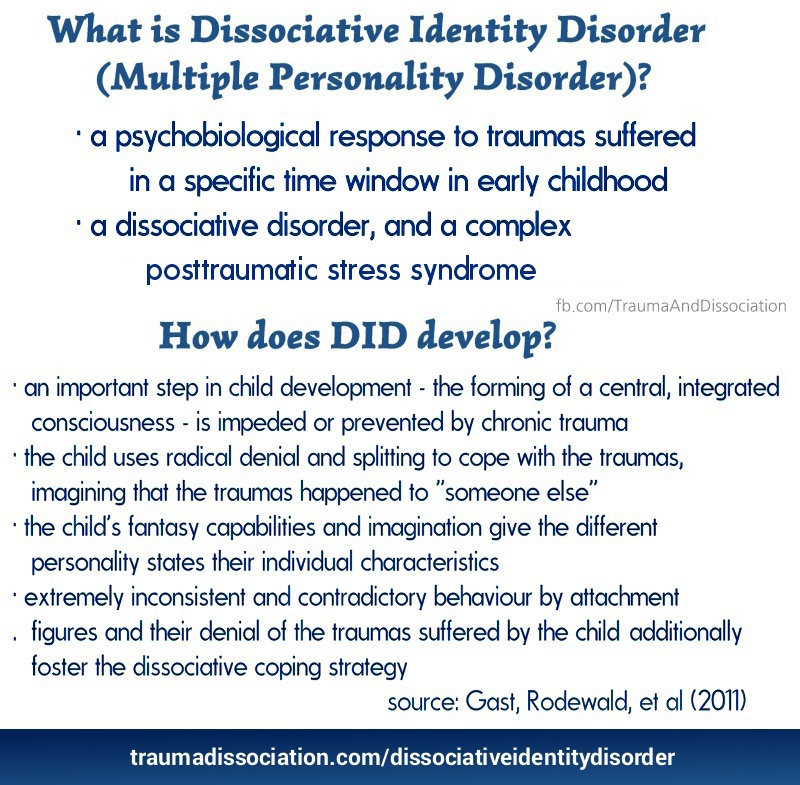
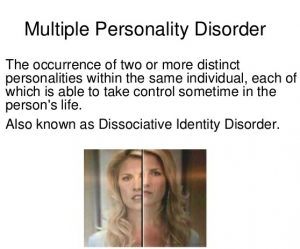
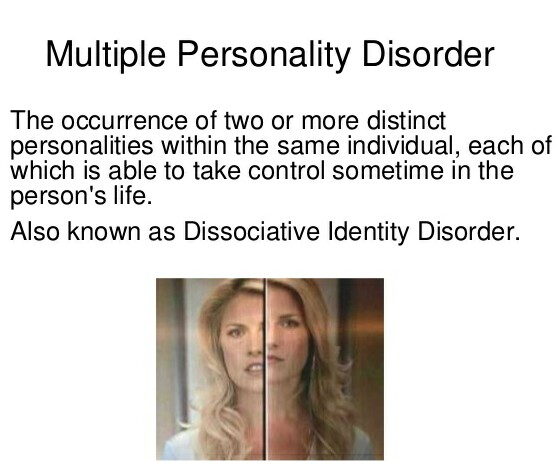
Which really confirms my suspicion that we are, as a whole, schizophrenic. And maybe even multiple personality disordered. Or dissociate…
We “blatantly” ignore, or not see what is in front of us. We marry a person who we could know they will leave us, abuse us, beat us, but for some inner reason, we don’t see it.
Then when the tragedy hits, and a therapist asks: did you see that… we look and now we see it.
And you are not lying either: one personality is blind to it. It doesn’t fit in, so you don’t see it.
The moocher doesn’t see that she is mooching. The ungrateful person doesn’t see that he is ungrateful. The excuse finder, explainer, justifier doesn’t see that they are justifying.

Maddening for a coach, and deadly for you.
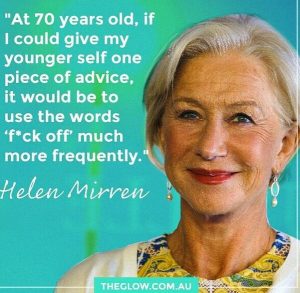
I have done plenty of stuff in my life I wasn’t proud of at the time. I suppressed even seeing them… until I integrated.
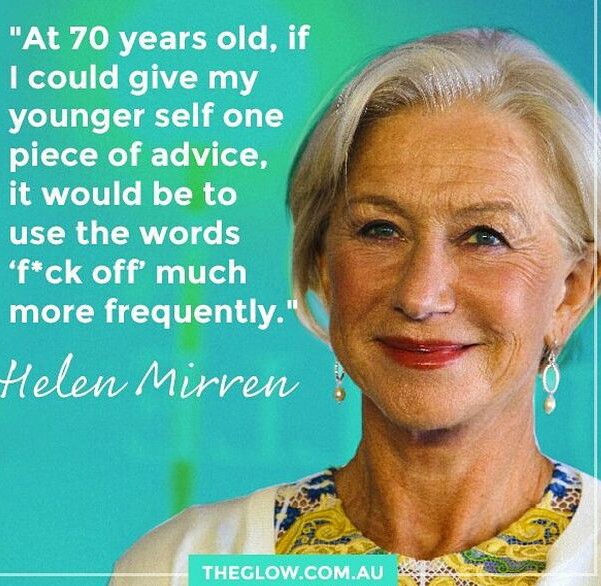
Then they because: oh, A is A… f… it.

I have been watching all kinds of movies where educated, self-possessed women get pregnant. It never made much sense to me, but with this new angle to look from, my hunch is that these women’s self-image doesn’t agree with having sex. So the one who is having sex doesn’t know about the other, and vice versa. ((vice versa: with the main items in the preceding statement the other way around.))

And some people have a taker persona and a “I pay for everything I get, or work for it…” persona… and they never suspect that the taker persona has taken over and is going to get them kicked out.
It always comes as a surprise.

I used to think that it’s pretending, but I now see that it is in fact a mental disease. Where you really have two standards that don’t work together, and you had to split yourself in two.

I am working on integrating you.

In the beginning it may get worse.

When I first revealed the fact to my client, after some argument, and justification, and explanation, he seemingly took the facts… but today he regressed to a 3-year old who needs to explain everything…

It seems that different second persona was born, created at different ages, and more than one thing got stuck there.

One result of the integration, if succeeds, is that you’ll be able to become an adult.

An adult sees the world differently. Sees his capacities, sees his abilities, and can make the best in a world that needs you to be capable.

A grown person who is stuck in a young state, cannot access their adult capacities, and easily slip into despair, helplessness, needy, or wimpy states.
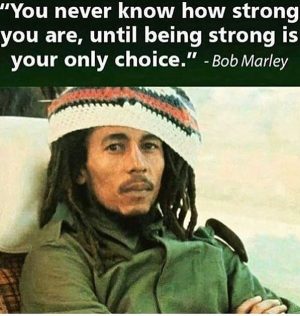
My Gentian persona, going into despair at the drop of a hat, was a way you could see that I wasn’t an adult through and through. I am now an adult 98%.
My client in this article: 10%.

I am adding this measure to the Starting Point Measurements. Why? Because it will help pinpointing where you need work.

((These are the questions I measure in your Starting Point Measurements

1. your vibration (1-1000):
2. your overall intelligence, emotional, intellectual, spiritual, body, relationship, etc.:
3. the number of spiritual capacities you have:
4. your soul correction (your machine): https://yourvibration.com/sc
5. do you have attachments?
6. the level of your health (1-100):
7. the level of your cell hydration (1-100):
8. your relationship to feedback and instruction:
9. The level of discomfort you are willing to allow w/o trying to fix it. This is your TLB score…
10. The size of your vocabulary: the number of words you can use accurately:
11. To what degree you think of yourself:
12. # of fixed mindset:
13. Ambition:
14. Desire:
15. Degree of inauthenticity overall:
16. Level of integrity 1-100:
17. how enslaved are you to memes? (what percentage of your life is run by memes?)
18. do you have a bridge between your precious “I” and your actual I? your level of delusion
19. To what degree you have access to your adult capacities %
20. Recommendations:

))

Read the original article: Everything you ever wanted is available to you, if…
What is a seeming? I why is it helpful?

One type of memes that you honor as the truth are called a seemings. It is that way… but if you can change the saying: “It seems to me that…” then it becomes a seeming.

Why turn something into a seeming?

Saying “It seems to me” starts turning on the capacity of responsibility.

Responsibility, the way the capacity sees it, is a privilege. It is a way to look at the world where your power is intact, and you have access to it. Access means: you can feel it, you can use it. Power for what? Power to be well, power to change something, move something, create something. Continue reading

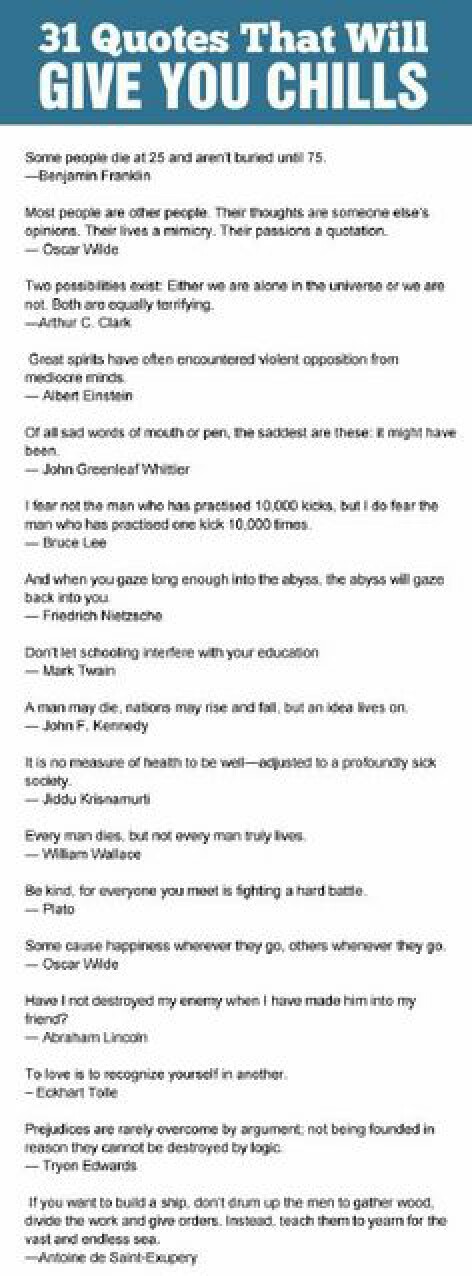
31 Quotes That Will Give You Chills

  1. Some people die at 25 and aren’t buried until 75. ~ Benjamin Franklin
  2. Most people are other people. Their thoughts are someone else’s opinions. Their lives a mimicry. Their passions a quotation. ~ Oscar Wilde
  3. Two possibilities exist: Either we are alone in the universe or we are not. Both are equally terrifying. ~ Arthur C. Clark
  4. Great spirits have often encountered violent opposition from mediocre minds. ~ Albert Einstein
  5. Of all sad words of mouth or pen, the saddest are these: it might have been. ~ John Greenleaf Whittier
  6. I fear not the man who has practised 10,000 kicks, but I do fear the man who has practised one kick 10,000 times. ~ Bruce Lee
  7. Continue reading

Should you become a client? Would I even accept you as a client?

For decades one of my sore spots was that people refused to serve me, even though I paid them.

I remember saying to myself: my money is not good enough for you? and wept.

I had no idea how I “accomplished” that… in 20/20 hindsight it is still a little spotty.

What wasn’t clear to me, never even occurred to me, how my attitude effected the service provider. My “To what degree you think of yourself:” starting point measure was, at the time, 70%. From my behavior I would have guessed it was higher.

Mainly I overrode what they said. I argued, I knew better, I acted with contempt…

What I didn’t know then is that being a service provider needs to be a win, or no service.

A customer who is not happy is a drag on an provider, and not worth the little (or even a lot of) money they pay.

I was that kind of customer…
Continue reading

Create a life you love

Oh no! This video software that used to work doesn’t work any more. I cried out… This can happen to anyone. Technology changes so rapidly, keeping pace with it is both expensive and time consuming.

Sometimes there is an upgrade. Nowadays upgrades cost money… or the software developer simply abandoned you… and you are stranded with a software that doesn’t work any more.

I have been teaching what I teach for seven years. Teach people a world view that has been tested and true, and includes the invisible. This world view is sharply different from the accepted norms… but it works, instead of just being a nice theory like what psychologists and philosophers teach. Or even Landmark Education… or the Kabbalah Centre… or any of the gurus. Continue reading

Scarcity, abundance… big words… again. What are they, and how can you get into abundance?

Both are context words. Neither talks about the stuff that is inside the context… inside the wrapper. The wrapper tells you how to look at the content.

It has nothing to do with the stuff, or the quantity of it. It can be great, it can be plenty… the context, scarcity or abundance will tell you what to feel, what to think, what to do.

Why? Because context is decisive.

You can have plenty inside the context of scarcity, and feel that you don’t have enough. Enough time, enough stuff, enough happiness, enough whatever… Continue reading

What you say and what you do… when it comes to your children becoming educated, productive people

One of the signs of the overwhelming inauthenticity ((My definition of authenticity is that there is nothing in the unsaid that isn’t consistent with what is visible… Authenticity is one of those big words that no one knows what it really means… so they go by feeling. The simplest way to define authenticity is that there is no pretense, no façade, no game playing. The person is the same through and through, whether he/she is seen or not.

Most people smile a lot in their pictures, but I can feel their anxiety, their fear, their inner trembling.

One more thing that I haven’t said before, but given that we are working with memes: if you obey memes, if you repeat memes, if you try to fit in with memes, you cannot be authentic.

Because your inner you, whether you know who it is or what it is, knows that what you are saying, what you are doing is not you… you are trying to fit in. So you cannot be authentic.

Werner has a saying about authenticity: he says we are always inauthentic, so we can only be authentic (tell the truth) about our inauthenticity

more videos at https://yourvibration.com/videos

One of the measure in the Starting Point Measurements is the inauthenticity measure.

)) and low level of integrity is the gap between what people say and what people do.

We, my marketing student and I, have been surveying mothers and fathers of children to find out to what degree they care about their children’s future. Continue reading

Equality, racist, collusion, big words you throw around

race,racist, racismYesterday I used the free community van to get to two stores I cannot get to easily on my own.

Note: in the illustrations I am not taking sides. I am illustrating that there is confusion and disagreement in what is race, what is racist, what is racism, and what it does is it makes people rigid, lie about what they think, and vote for Trump… ugh.

The driver of the van, PhD in sociology, asked if it bothered me if he continued to listen to NPR radio ((National Public Radio)) . It was a public debate in Trump and if he was a racist.

I listened for at least half an hour, and observed that no one bothered to define what they meant by racist. Or what is racism. So the discussion was as if blind people were discussing the color of something… lots of talk. Lots of passion. Very little substance. Continue reading

How to get your brain to read?

How to Get Your Mind to Read ((article by Daniel T. Willingham (@DTWillingham) is a professor of psychology at the University of Virginia and the author, most recently, of “The Reading Mind: A Cognitive Approach to Understanding How the Mind Reads.” Republished from the New York Times

Photo: Credit Lilli Carré))
Americans are not good readers. Many blame the ubiquity of digital media. We’re too busy on Snapchat to read, or perhaps internet skimming has made us incapable of reading serious prose. But Americans’ trouble with reading predates digital technologies. The problem is not bad reading habits engendered by smartphones, but bad education habits engendered by a misunderstanding of how the mind reads.

Just how bad is our reading problem? The last National Assessment of Adult Literacy from 2003 is a bit dated, but it offers a picture of Americans’ ability to read in everyday situations: using an almanac to find a particular fact, for example, or explaining the meaning of a metaphor used in a story. Of those who finished high school but did not continue their education, 13 percent could not perform simple tasks like these. When things got more complex — in comparing two newspaper editorials with different interpretations of scientific evidence or examining a table to evaluate credit card offers — 95 percent failed.

There’s no reason to think things have gotten better. Scores for high school seniors on the National Assessment of Education Progress reading test haven’t improved in 30 years.

Many of these poor readers can sound out words from print, so in that sense, they can read. Yet they are functionally illiterate — they comprehend very little of what they can sound out. So what does comprehension require? Broad vocabulary, obviously. Equally important, but more subtle, is the role played by factual knowledge.

All prose has factual gaps that must be filled by the reader. Consider “I promised not to play with it, but Mom still wouldn’t let me bring my Rubik’s Cube to the library.” The author has omitted three facts vital to comprehension: you must be quiet in a library; Rubik’s Cubes make noise; kids don’t resist tempting toys very well. If you don’t know these facts, you might understand the literal meaning of the sentence, but you’ll miss why Mom forbade the toy in the library.

Knowledge also provides context. For example, the literal meaning of last year’s celebrated fake-news headline, “Pope Francis Shocks World, Endorses Donald Trump for President,” is unambiguous — no gap-filling is needed. But the sentence carries a different implication if you know anything about the public (and private) positions of the men involved, or you’re aware that no pope has ever endorsed a presidential candidate.

You might think, then, that authors should include all the information needed to understand what they write. Just tell us that libraries are quiet. But those details would make prose long and tedious for readers who already know the information. “Write for your audience” means, in part, gambling on what they know.

These examples help us understand why readers might decode well but score poorly on a test; they lack the knowledge the writer assumed in the audience. But if a text concerned a familiar topic, habitually poor readers ought to read like good readers.

In one experiment, third graders — some identified by a reading test as good readers, some as poor — were asked to read a passage about soccer. The poor readers who knew a lot about soccer were three times as likely to make accurate inferences about the passage as the good readers who didn’t know much about the game.

That implies that students who score well on reading tests are those with broad knowledge; they usually know at least a little about the topics of the passages on the test. One experiment tested 11th graders’ general knowledge with questions from science (“pneumonia affects which part of the body?”), history (“which American president resigned because of the Watergate scandal?”), as well as the arts, civics, geography, athletics and literature. Scores on this general knowledge test were highly associated with reading test scores.

Current education practices show that reading comprehension is misunderstood. It’s treated like a general skill that can be applied with equal success to all texts. Rather, comprehension is intimately intertwined with knowledge. That suggests three significant changes in schooling.

First, it points to decreasing the time spent on literacy instruction in early grades. Third-graders spend 56 percent of their time on literacy activities but 6 percent each on science and social studies. This disproportionate emphasis on literacy backfires in later grades, when children’s lack of subject matter knowledge impedes comprehension. Another positive step would be to use high-information texts in early elementary grades. Historically, they have been light in content.

Second, understanding the importance of knowledge to reading ought to make us think differently about year-end standardized tests. If a child has studied New Zealand, she ought to be good at reading and thinking about passages on New Zealand. Why test her reading with a passage about spiders, or the Titanic? If topics are random, the test weights knowledge learned outside the classroom — knowledge that wealthy children have greater opportunity to pick up.

Third, the systematic building of knowledge must be a priority in curriculum design. The Common Core Standards for reading specify nearly nothing by way of content that children are supposed to know — the document valorizes reading skills. State officials should go beyond the Common Core Standards by writing content-rich grade-level standards and supporting district personnel in writing curriculums to help students meet the standards. That’s what Massachusetts did in the 1990s to become the nation’s education leader. Louisiana has recently taken this approach, and early results are encouraging.

Don’t blame the internet, or smartphones, or fake news for Americans’ poor reading. Blame ignorance.

Turning the tide will require profound changes in how reading is taught, in standardized testing and in school curriculums. Underlying all these changes must be a better understanding of how the mind comprehends what it reads.


Read the original article: How to get your brain to read?

Conscious awareness… what is it really? And what does your vocabulary have to do with it?

We throw about big words, and we pretend that we know them. Even “scientists” just pretend. If they didn’t, they would be explaining, clarifying the words, but they don’t.

In the Starting Point Measurements the vocabulary number is what indicates this. I originally intended to call this clarity, but then I decided that if it refers to words, then maybe it can be instructive.

It hasn’t been.

So this article will be, mostly, about words.

Whenever we say conscious awareness, we are talking about words. No words, no conscious awareness.

Continue reading