Spiritual Capacities: Seeing Wide and Far

This are the rarest human qualities, rarest capacities of all. They require high level of consciousness… that is why.

Of course no one is high consciousness or low consciousness… we are all on a scale of consciousness.

For example I discovered, doing the experiment with the candy yesterday, through glimpses of my behavior and thoughts, that side by side the high vibration, high consciousness person there are remnants of callousness (showing or having an insensitive and cruel disregard for others, cold hearted, unfeeling) that I wasn’t aware of. It includes me, it includes my health, it includes everyone.

I woke up at 3 am from a nightmare… a tiger was licking my dog (I don’t actually have a dog, I have never had one) before it would eat it, and it was all my fault… I was scrambling for some weapon, until I stumbled onto a rake, and stabbed the tiger with it and it let go of the poor dog. Continue reading

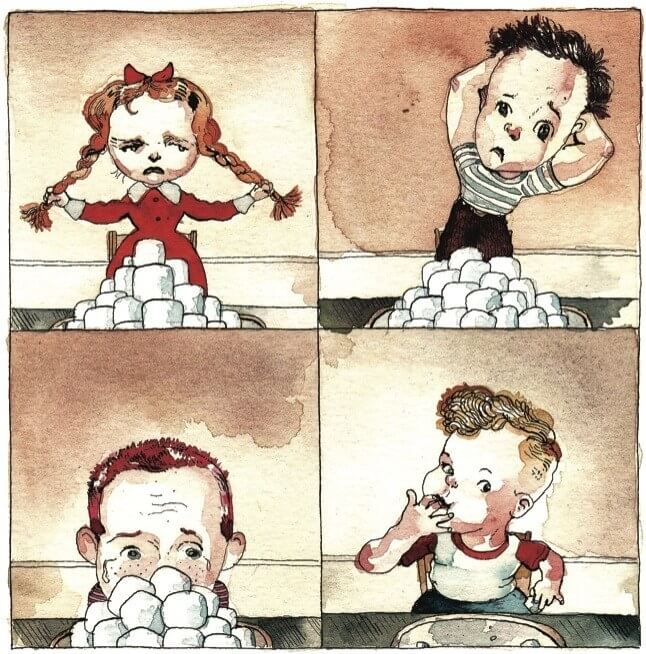
Don’t even look at the marshmallow… the hardest principle ever

I like failed experiments. Why? Because successful experiments are more likely the result of confirmation bias… So even in experiments I opt for the Anna Karenina Principle: remove all that isn’t a certain yes, everything that is accidental in the results or make the result a bad result, something I don’t want.

So I am preparing for an experiment today, the “don’t eat the marshmallow” experiment.

I have been, thus far, absolutely unreliable and untrustworthy to not eat something I should not eat, like candy or chocolate, or fruit.

So I ordered a 10 oz bag of dark chocolate covered mint patties, sugar free. Last time I did this I ate all of it within 16 hours… Continue reading

How to keep your vibration high at Christmas?

I am sitting at my computer, observing the emails I get, observing people’s behavior.

It seems that the (Christian) world is disappearing into two main fantasy lands, two main unrealities: Christmas, and making cash infusion into their lives.

All horizontal plane, all hurry, all puppets on a string. All based on the unreality of lack. (I will write about this lack issue in another article… it’s important, so I may even email you to let you know…)

Your life is dominated by the separation of the two selves: the higher self is sent into its room for these last days of the year, and the lower self is throwing its weight around. Continue reading

Why is it so hard to get out of the rut you are in?

 Simple answer: You lack skills and capacities… You can boil water, make coffee in the coffee maker, drive a car, open your smartphone… You are not quite hopeless… or are you? Not quite hapless either… or are you? ((Here is an article, 10% truth value… others talk about the topic… read it and feel how confusing it is…

Skills vs Competencies. What’s the Difference?

Gail Sturgess-December 6, 2012-Competency Managemen

What is a Skill?

These definitions were extracted from a number of different sources, but they all seem to say, more-or-less, the same thing:

  • Proficiency, facility, or dexterity that is acquired or developed through training or experience.
  • The ability, coming from one’s knowledge, practice, aptitude, etc., to do something well
  • An ability and capacity acquired through deliberate, systematic, and sustained effort to smoothly and adaptively carry out complex activities or job functions involving ideas (cognitive skills), things (technical skills), and/or people (interpersonal skills).
  • A skill is the learned capacity to carry out pre-determined results
  • A learned ability to bring about the result you want, with maximum certainty and efficiency
  • Proficiency, facility, or dexterity that is acquired or developed through training or experience.

So, a Skill is something Learned in order to be able to carry out one or more job functions.

What is a Competency

Again, these definitions were extracted from a number of different sources:

  • A cluster of related abilities, commitments, knowledge, and skills that enable a person (or an organization) to act effectively in a job or situation.
  • Competencies refer to skills or knowledge that lead to superior performance.
  • Measurable skills, abilities and personality traits that identify successful employees against defined roles within an organisation
  • A competency is more than just knowledge and skills. It involves the ability to meet complex demands, by drawing on and mobilising psychosocial resources (including skills and attitudes) in a particular context.
  • A measurable pattern of knowledge, skills, abilities, behaviours, and other characteristics that an individual needs to perform work roles or occupational functions successfully.
  • Competencies specify the “how” (as opposed to the what) of performing job tasks, or what the person needs to do the job successfully.
Competencies, therefore, may incorporate a skill, but are MORE than the skill, they include abilities and behaviours, as well as knowledge that is fundamental to the use of a skill.

An Example

An example of this in an IT context is “Programming”. To effectively write a computer program one needs good analytical, logical, and interpretive ability as well as the skill to write the program in a specific language. So, learning Java, C++, C#, etc. is a Skill. But underlying the ability to use that skill effectively is analytical, logical and interpretive ability – those are Competencies.

The reason that we suggest this is because it is relatively easy to learn other programming languages once one knows one language well (and I talk from personal experience). However, without the underlying Competence, it is virtually impossible to write an effective program – irrespective of the language.

Types of Competencies

Competencies effectively fall in three groups:

  • Behavioural (or Life Skills) Competencies Life skills are problem solving behaviours used appropriately and responsibly in the management of personal affairs. They are a set of human skills acquired via teaching or direct experience that are used to handle problems and questions commonly encountered in daily human life. Examples are: Communication, Analytical Ability, Problem Solving, Initiative, etc.
  • Functional (or Technical) Competencies Functional Competencies relate to functions, processes, and roles within the organisation and include the knowledge of, and skill in the exercise of, practices required for successful accomplishment of a specific job or task. Examples are: Application Systems Development, Networking and Communication, Database Analysis and Design, etc.
  • Professional Competencies Professional competencies are competencies that allow for success in an organisational context. They are the accelerators of performance or – if lacking in sufficient strength and quality – are the reason people fail to excel in jobs. Examples are: Business Environment, Industry and Professional Standards, Negotiation, People Management, etc.

Levels of Criticality

In any organisation there are some Competencies that are more important than others, based on different criteria:

  • Core Competencies – Core competencies are those competencies that any successful employee will need to rise through the organisation. These Competencies would generally relate in some way to the business of the organisation.
  • Key Competencies – Key competencies contribute to valued outcomes of the organisation, defining the abilities of individuals to meet strategic demands, and are important not just for specialists but for all individuals.
  • Critical Competencies – Critical competencies are competencies without which the organisation will be unable to achieve it’s goals and strategy.

and some more clarification…

Skill: Noun
Capacity to do something well; technique, ability. Skills are usually acquired or learned, as opposed to abilities, which are often thought of as innate.

Capacity: noun (plural: capacities)

  • The ability to hold, receive or absorb
  • A measure of such ability; volume
  • Capability; the ability to perform some task
  • Mental ability; the power to learn
  • A faculty; the potential for growth and development ))

If you remember, my passion, my purpose, my reason d’etre is to penetrate the invisible portion of all knowledge. It gives me joy, and it keeps me busy.

One of the tools I use to do my “work” is the ability to see what I feel. See its size, nature, movement, and its connections to other things. I am an empath and I am (I hate the word) a clairsensar, which means what I just said… I see what I feel… blah blah blah. Continue reading

Intrapersonal intelligence, the ability and willingness to look within and see accurately

People with intrapersonal intelligence are adept at looking inward and figuring out their own feelings, motivations and goals. They are quintessentially introspective. They analyze themselves and seek understanding. People with intrapersonal intelligence are intuitive and usually introverted.

A year or two ago I saw a rather amateurish but good Singaporean TV show (The Truth Seekers) that shook me to my core… and woke me up.

I may be a conspiracy seeker… but I have a hunch that we, humans, have been trained, for millennia,  by society to look the other way, to deny human nature, and escape into nice-nice, and sugar and spice, instead of confronting head-on what we call human nature. Continue reading

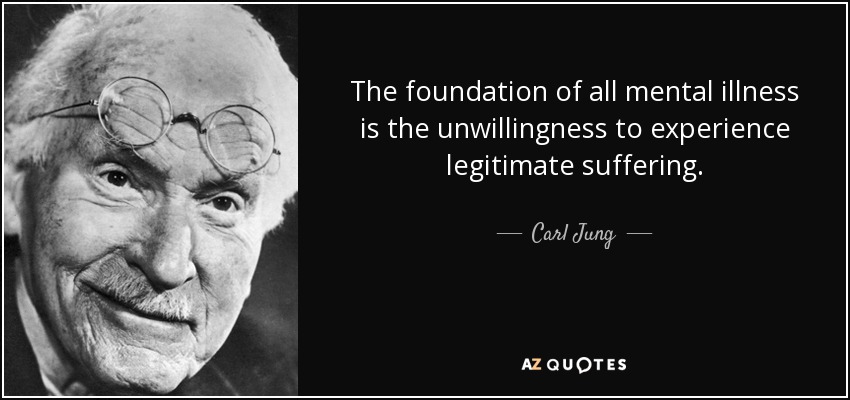
Read again: Is your inability to say what happened a type of mental illness?

This morning something pulled me back to bed after I got up.

I considered it guidance, and I got back to bed.

What came next was amazing: trips down memory lane, all centering around mental illness, mental stability, your TLB, and what was in common among the many people I remember so clearly, people I spent time with in mental institutions.

As an empath, other people’s feelings, emotions tend to tug at me. today 99% of what I feel is not mine… But before I became conscious, before I started to climb the consciousness tree, 30% of the feelings I felt were mine. I also had a lot more noise in my head… all talking at the same time.

The only reason I know, with 20/20 hindsight, that I was hospitalized not for what I felt, is that none of the medication worked… I wasn’t the person who was crazy, I just felt the craziness of others.

My theory of mental illness has always been that it is an escape… a hiding place.

Continue reading

Reality for dummies… the inner reality

Life doesn’t seem to be nice to you. It doesn’t give you what you want, and it gives you a whole lot of what you don’t want.

But there is a science, a system of how to flip that over… and this is what this article is about…

The inner reality…

It’s not when you can talk about it. It is not when you understand. It is when you can actually SEE it happening, this is when consciousness may take over… and lead you to where your inner terrain can become more friendly to you.

You see, reality is hard to see.

Why? Because just like pin tumbler locks, with many pins that need to align, need to be picked, or need you to have the right key, can keep you out of your house, the many filters, the many members of your Team You, will all have a say in what you can see…

Team You is like any democracy: the voice of the stupidest is the loudest… just look at America. Continue reading

Reality for dummies

A few years ago I made a lot of money selling my Sleep Rescue Remedy. It worked, and 80% of the buyers bought it again. All I needed to do is fill and shop bottles fast enough.

Sleep is a big problem, and unless it is solved, people are getting more and more incoherent and less and less brilliant, less and less able to contain their anger, frustration, fear, anxiety, or desires…

Sleep is a lot like eating: people are unwilling to be disciplined about it, and they pay the price. A big price.

But it is a potentially big money maker.

So why am I not pursuing it? After all making money is good, right?

My answer even surprised me: because it is boring.

Hm, interesting. Is all making money boring? Continue reading

The Dragon Tail effect

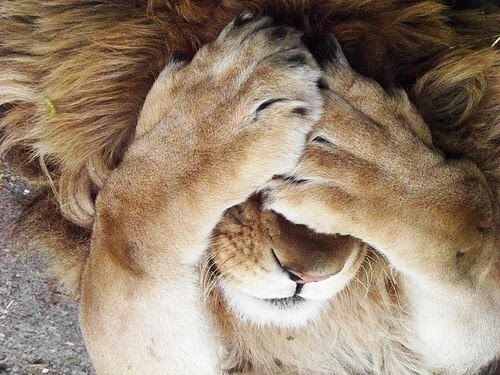
You are unaware of your effect on your world. The world sees your dragon tail effect… only you don’t. You are a lot like a 3-year old who covers their eyes and thinks they can’t be seen… ((Awareness is what you can see. Your awareness level is another Starting Point Measurement…

Why Do Kids Cover Their Eyes When Hiding?

By Joanna Goddard in https://cupofjo.com/2012/11/why-do-kids-cover-their-eyes-when-hiding/

You know how children often cover their eyes when they want to hide? Well, Cambridge researchers wanted to discover why, and here’s an amazing quote from their findings…

“In both studies so far, when the children thought they were invisible by virtue of their eyes being covered, they nonetheless agreed that their head and their body were visible. They seemed to be making a distinction between their ‘self’ that was hidden, and their body, which was still visible. Taken together with the fact that it was the concealment of the eyes that seemed to be the crucial factor for feeling hidden, the researchers wondered if their invisibility beliefs were based around the idea that there must be eye contact between two people—a meeting of gazes—for them to see each other (or at least, to see their ‘selves’).”

How sweet is that? Children are fascinating.)) Continue reading

Feelings, emotions… what should you do with them? or When you have a hammer, you don’t want any other tools…

Most people have one or two tools in their tool box… And what is even stranger: they don’t want any more. Why?

Some of you cannot deal with complexity, and therefore you will deny your right to feel feelings. And some of you will indulge your feelings and never look, never ask any probing questions that could let you see what is really going on…

What am I talking about?

In the Playground program, always starting new groups, we attempt to bring clarity to life, we attempt to reclaim our power over our lives by separating what life seems to be, what seems to be happening in many different ways. One of these is having a “reality” side, everything a Martian could see or detect, and another that is all words. Continue reading